
By Mindy Antimie, MS, RDN
You may have heard that soy is too high in estrogen and that eating it can cause cancer. These beliefs stem from research done decades ago that made headlines. Today, there is still fear surrounding consuming soy despite research that has proven for more than a decade that soy is healthful. Even organizations such as the American Heart Association and the American Cancer Association have listed soy as a healthful food.
What is Soy?
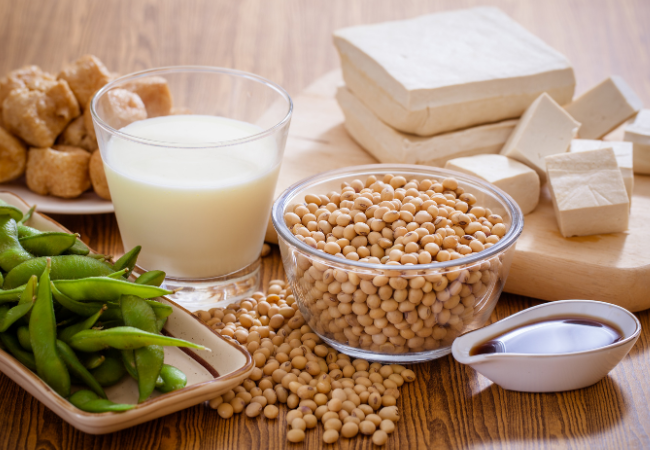
Soy is a member of the legume family. It was used primarily in Japan, China and Korea and then became popular in the United States and South America in the 20th century. The most popular forms of soy include tofu, soy sauce, soy milk, miso, tempeh, natto, and edamame. Soy can also be found in packaged foods as a filler.
Whole forms of soy such as edamame provide plenty of fiber, vitamins and minerals. Soy is a fantastic source of protein, while also being a cheap alternative to animal products.
How the Controversy Started
The original studies that hit the media in the beginning were done in rodents. It showed that rodents eating soy developed rapid tumor growth, and developed breast cancer. However, rodents do not process soy the same way that humans do, therefore these claims do not transfer to humans.
Is soy excessive in estrogen? Soy contains isoflavones which is a type of phytoestrogen. However, phytoestrogen and estrogen differ greatly. Especially when we are consuming them through food. Additionally, many other foods contain phytoestrogens such as plums, berries, grapes, sprouts, cabbage, spinach and many more. Caution surrounding isoflavones should be applied when using supplements, as it is more potent.
Health Benefits of Soy
Soy can reduce the risk of heart disease by lowering your cholesterol and blood pressure. Several studies have shown that soy can lower LDL cholesterol while raising HDL cholesterol. LDL cholesterol contributes to plaque buildup on your blood vessel walls, which can cause a blockage and subsequent heart attack.
Interestingly, consuming soy has been correlated with lower incidences of certain types of cancer. Some analyses show that soy lowers cancer risk by 15-37%. Soy contains isoflavones which is a type of polyphenol. Polyphenols have strong antioxidant capabilities which protects your cells from damage.
Isoflavones from soy can also improve insulin sensitivity. This can help lower your blood sugar and reduce the risk of type 2 diabetes. Soy is in whole forms, such as edamame, are high in fiber. This can also contribute to regulating blood sugar, reducing cholesterol, and lowering your risk of certain cancers.
Conclusion
Soy has gotten a bad reputation throughout the years. Research has shown that soy can actually reduce the risk of the very diseases it was once believed to contribute to. It’s a great source of protein, especially as an animal product alternative.