


Afraid of Falling? Physical Therapy Is Here To Catch You

Marion, 74, was terrified of falling. (Note that her name has been changed.) She’d heard the statistics: Falls are a leading cause of injury among people over 60 and the second leading cause of injury deaths worldwide. And although she’d always been active, she found her balance changing as she grew older, which only deepened her fears.
Like many people, Marion didn’t realize that the fear of falling can also be debilitating. That fear kept her close to home. She didn’t spend as much time with friends and family, and her lifestyle was much less active than it had been ten years earlier–which actually increased her fall risk!
But then Marion began seeing a physical therapist to help with her hip pain. When she shared her concerns about falling, he incorporated fall prevention strategies into her treatment plan, building Marion’s confidence enough that she returned to some of her favorite activities, like gardening and meeting with friends for a weekly coffee.
At Kaizen Physical Therapy, we know falls can be frightening. But we also know that fall prevention training can help you face your fears and give you the confidence to live an active, healthy lifestyle, even into old age.
Ready to get started with your own fall prevention plan? Schedule an appointment with us today!
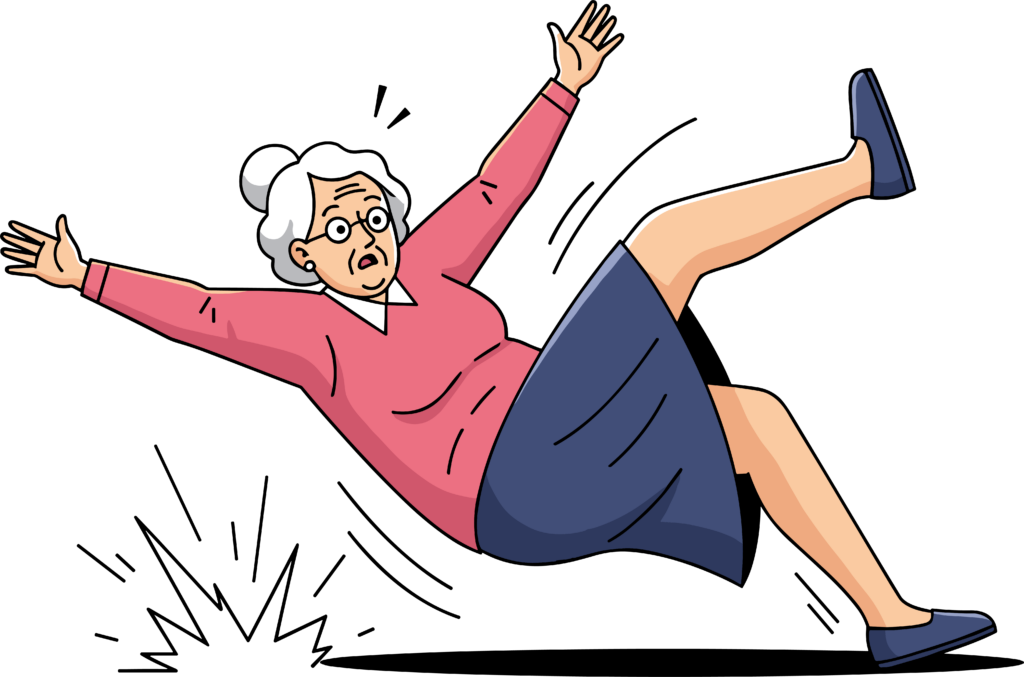
Understanding Your Fall Risk
Everyone’s fall risk is different. No single factor determines your likelihood of a fall; instead, it’s a complex blend of age, lifestyle choices, and health conditions. The more of these factors apply to you, the more likely you are to fall.
Which items on this fall risk list apply to you or a loved one?
- Advanced age (60 years or older)
- Being female (women are more likely to suffer falls than men)
- Joint pain, including from arthritis
- Spells of dizziness or vertigo (a spinning sensation)
- Decline in vision or hearing
- Sedentary lifestyle
- Impaired balance or gait
- Weakness in the lower body
- Use of medications that can cause dizziness or balance issues
- Neurological disorders such as Parkinson’s disease or Alzheimer’s
- Stroke survivor
- A history of falls
If you think you might be at a high risk of falling, don’t get scared–give us a call! Our team of physical therapists can assess your fall risk and provide you with a customized fall prevention plan that can lower the likelihood of a fall-related injury.
How Physical Therapy Can Keep You On Your Feet
A good fall prevention plan will address your specific fall risks. For example, someone who suffers from regular vertigo attacks would benefit from specialized therapy to address that issue. Meanwhile, someone with Parkinson’s disease doesn’t necessarily need to worry about dizziness but does need to address an impaired posture, balance, and gait.
Our therapists will work with you to decide which specific treatment options will be the right choice for your personal fall prevention plan. That said, there are some commonalities. Here are a few of the techniques we typically include:
Regular Exercise Program: Staying active plays a significant role in keeping you from a fall. We’ll suggest an exercise program that suits your needs and abilities, such as a simple walking regimen.
Pain Management: Joint pain can inhibit mobility, resulting in a sedentary lifestyle and increased fall risk. If you suffer from pain, we’ll work with you to manage it safely and effectively.
Balance Training: Balance training is the foundation of fall prevention. We’ll guide you through specialized exercises that challenge your balance in a safe, monitored environment–ensuring you see improvements over time.
Strength Training: One of the reasons older people have an increased fall risk is that you lose muscle mass as you age, making it more challenging to move around. We’ll prepare a strength training program appropriate to your ability level and help you restore some of that lost muscle mass.
Gait Training: This technique focuses on improving your walking patterns. Certain conditions (such as Parkinson’s disease or stroke) can severely change your gait, and addressing those impairments can reduce your chances of falling.
No More Fear of Falling: Call Us Today!
A dedicated fall prevention plan from Kaizen Physical Therapy can give you the confidence to age healthfully, no matter your fall risk. Call us today to schedule an appointment for your initial consultation!
Sources: https://www.nia.nih.gov/health/falls-and-fractures-older-adults-causes-and-prevention, https://www.choosept.com/guide/physical-therapy-guide-falls, https://www.who.int/news-room/fact-sheets/detail/falls, https://bmcgeriatr.biomedcentral.com/articles/10.1186/s12877-019-1359-9

Dry Needling: The Effective Solution for Pain Management
If you’ve been living with muscle aches, tension, or nagging injuries, you may be wondering whether physical therapy can offer real relief. For many patients, dry needling for pain management has proven to be an effective and evidence-based solution. This technique targets muscular trigger points that contribute to pain, tightness, and limited mobility.
At Kaizen Physical Therapy, physical therapists use dry needling as part of a comprehensive treatment plan to help reduce discomfort, restore function, and support recovery. Below are some of the most common questions patients ask when considering this approach.
Helping You Understand the Benefits of Dry Needling
What is dry needling, and how does it work?
Dry needling involves inserting a thin, sterile needle into specific muscle trigger points. These areas often feel like tight knots and can cause local or referred pain. The needle helps release tension, improve blood flow, and reset muscle function. This process allows your body to heal more efficiently by restoring natural movement patterns and decreasing irritation in the muscle and surrounding tissues.
Is dry needling the same as acupuncture?
Although both techniques use similar needles, they are not the same. Acupuncture is rooted in traditional Chinese medicine and is based on energy flow through meridians. Dry needling for pain management, on the other hand, is grounded in modern musculoskeletal science. It specifically targets trigger points in muscles and connective tissues to address movement dysfunction and pain.
Does dry needling hurt?
Most patients report a brief, dull ache or muscle twitch during the session. These sensations are normal and usually short-lived. Many people experience immediate relief or notice significant improvement within a day or two. Your therapist will adjust the technique to make the experience as comfortable as possible.
What conditions can dry needling help with?
Dry needling is often used for conditions involving muscle tightness, joint pain, or nerve irritation. These may include:
- Neck and back pain
- Shoulder impingement
- Tennis or golfer’s elbow
- Sciatica
- Hip and glute pain
- Plantar fasciitis
- Headaches caused by muscular tension
Physical therapists at Kaizen Physical Therapy assess your condition thoroughly to determine if dry needling for pain management is appropriate as part of your care.
How many sessions of dry needling will I need?
The number of sessions depends on your condition, how your body responds, and the goals of your treatment plan. Some patients see meaningful changes after one or two sessions. Others benefit from several weeks of combined therapy, which includes dry needling, exercise, and manual treatment. Your therapist will monitor your progress closely and adjust your care as needed.
Is dry needling safe?
Yes. Dry needling is considered safe when performed by licensed physical therapists trained in it. The needles are sterile, single-use, and disposed of immediately after use. Mild soreness or bruising at the needle site may occur, but these effects typically resolve quickly.
What happens after a dry needling session?
After treatment, you may feel some muscle soreness similar to the feeling after a workout. This is a sign that the tissue is reacting and beginning to change. Gentle movement, hydration, and heat or ice (as recommended by your therapist) can help reduce soreness. Many patients experience improved motion and reduced pain within 24 to 48 hours.
Why Dry Needling for Pain Management is Gaining Popularity
More people are turning to dry needling for pain management because it offers a focused, research-supported approach to addressing muscle dysfunction. Unlike passive treatments that only mask symptoms, dry needling works to change the underlying muscle response and restore functional movement. When combined with guided exercise and education, it can help reduce flare-ups and prevent re-injury.
Ready to Feel Better?
If pain is limiting your movement, focus, or energy, the team at Kaizen Physical Therapy is ready to help. Our therapists use dry needling for pain management alongside other evidence-based techniques to support your recovery. We’ll create a personalized care plan that targets the root of your discomfort and gets you back to doing what you enjoy.
Contact Kaizen Physical Therapy today to schedule your first visit. Let’s get started on your recovery.
Meet Our Certified Physical Therapists

Daniel Yang
Physical Therapist, DPT

Kylee Sutton
PT, DPT

Rodrigo Alaura
Physical Therapist, DPT
10-Minute Sausage Skillet with Cherry Tomatoes and Broccolini
This one-pan dinner has a nice buttery sauce, so serve it with some crusty bread for mopping.
Ingredients
- 1 tablespoon olive oil
- 12 ounces fully cooked Italian sausage (about 4 links), sliced into 1/4″-thick coins
- 2 pints cherry tomatoes
- 2 garlic cloves, pressed or finely chopped
- 4 sprigs thyme
- 2 bunches broccolini (about 1 pound), trimmed, halved lengthwise
- 1/2 teaspoon kosher salt
- 1/4 teaspoon freshly ground black pepper
- 3 tablespoons unsalted butter, cubed
- Crusty bread (for serving; optional)
Instructions
Step 1: Cook the base. Heat oil in a large skillet over medium-high. Add sausage and cook, stirring occasionally, until lightly browned, about 2 minutes. Add tomatoes, garlic, and thyme, stir to combine, and cook, pressing down on some of the tomatoes with the back of a wooden spoon to encourage bursting, 2 minutes. Add broccolini; season with salt and pepper. Cook, covered, 2 minutes. Remove from heat and stir in butter until melted.
Step 2: Serve. Divide sausage mixture among plates. Serve with bread alongside, if desired.

Exercise of the Month
ONE LEG BALANCE
(Ankles, Core, Balance)
With your hands on the back of a chair, countertop, or wall, slowly lift your uninjured leg upward behind you so that your weight lies on the leg with the injured ankle. Hold this position for 20 to 30 seconds and gradually progress to more seconds as you get stronger. 2 Sets, 1 Rep. (Materials needed: chair)